
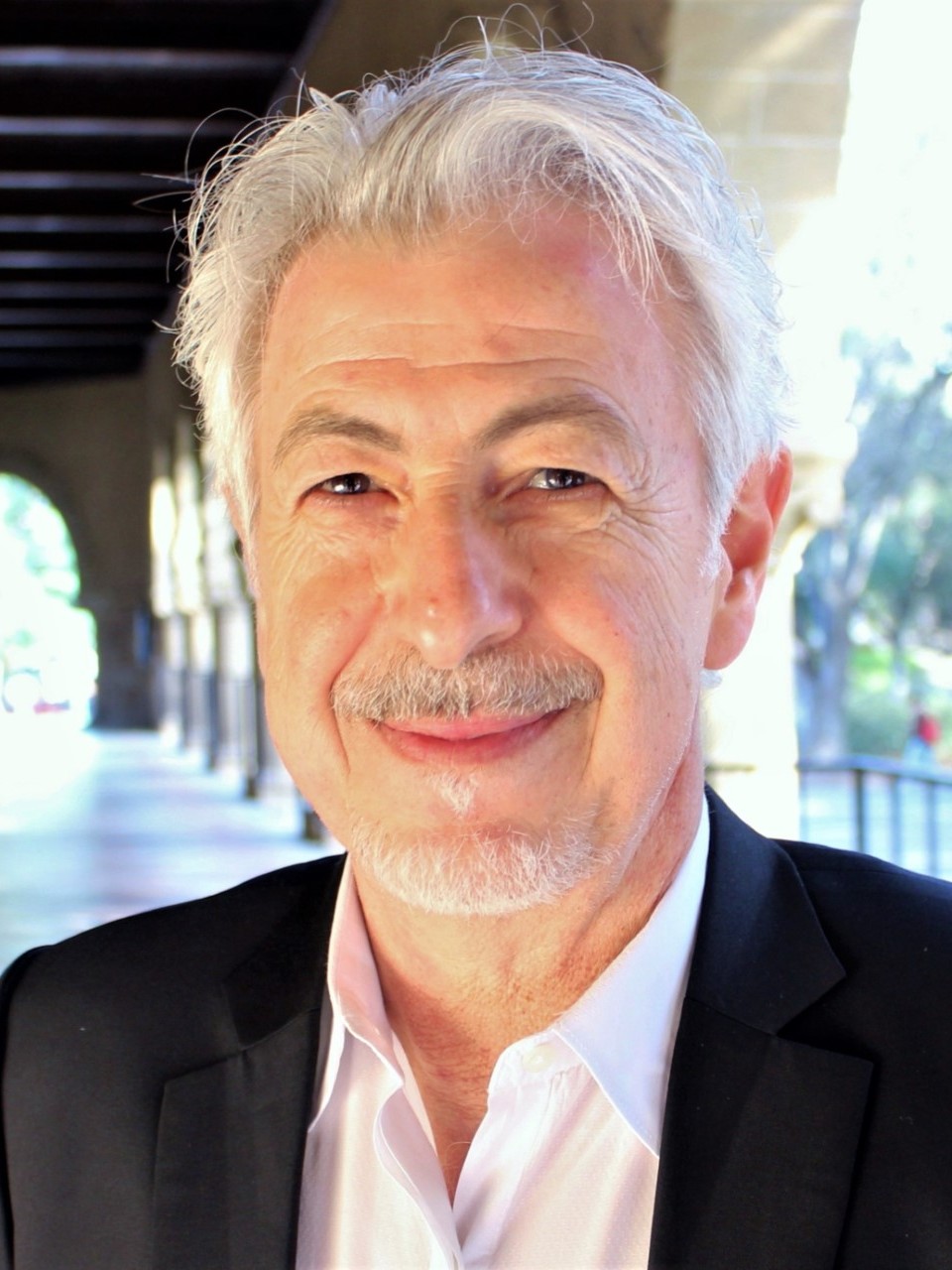
Bio: Oussama Khatib received his PhD from Sup'Aero, Toulouse, France, in 1980. He is Professor of Computer Science and Director of the Robotics Laboratory at Stanford University. His research in robotics focuses on novel control architectures, algorithms, sensing, and human-friendly designs for advanced capabilities in complex environments. With an emphasis on enabling robots to interact cooperatively and safely with humans and the physical world, these studies bring understanding of human movement for therapy, athletic training, and performance enhancement. This work on understanding human cognitive task representation and physical skills is enabling transfer for increased robot autonomy. With these core capabilities, we are exploring applications in healthcare and wellness, industry and service, farms and smart cities, and dangerous and unreachable settings – deep in oceans, mines, and space. He is President of the International Foundation of Robotics Research (IFRR) and a Fellow of IEEE. He is Editor of the Springer Tracts in Advanced Robotics (STAR) series, and the Springer Handbook of Robotics, awarded the American Publishers Award for Excellence in Physical Sciences and Mathematics. He is recipient of the IEEE Robotics and Automation (IEEE/RAS) Pioneering Award (for his fundamental contributions in robotics research, visionary leadership, and life-long commitment to the field), the IEEE/RAS George Saridis Leadership Award, the Distinguished Service Award, the Japan Robot Association (JARA) Award, the Rudolf Kalman Award, the IEEE Technical Field Award, and the Engelberger Award. Professor Khatib is a member of the National Academy of Engineering.
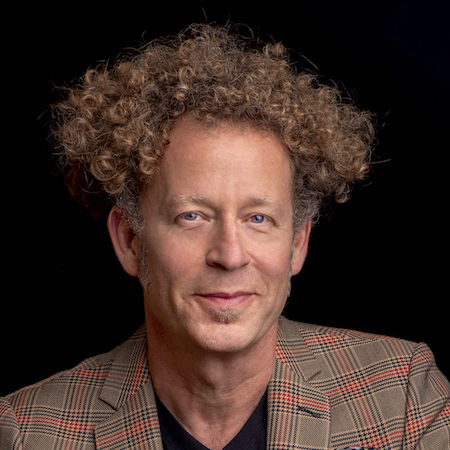
Bio: Ken Goldberg supervises research in Robotics and Automation. Ken holds dual degrees in Electrical Engineering and Economics from the University of Pennsylvania (1984) and a PhD from Carnegie Mellon University (1990). He joined the UC Berkeley faculty in 1995 and is Professor of Industrial Engineering and Operations Research, with secondary appointments in EECS, the School of Information, Art Practice, and the UCSF Dept of Radiation Oncology. Ken and his co-authors have published over 300 peer-reviewed technical papers on algorithms for robotics, automation, and social information filtering, and he holds ten U.S. patents. He served as Editor-in-Chief of the IEEE Transactions on Automation Science and Engineering (T-ASE), Co-Founder of the Berkeley Center for New Media, Co-Founder and CTO of Ambidextrous Robotics, Co-Founder of the Moxie Institute, and Founding Director of UC Berkeley's Art, Technology, and Culture Lecture Series.
Ken's art installations, based on his research, have been exhibited internationally at venues such as the Whitney Biennial, the Berkeley Art Museum, the SF Contemporary Jewish Museum, the Pompidou Center, the Buenos Aires Biennial, and the ICC in Tokyo. Ken has co-written three award-winning Sundance documentary films, "The Tribe", "Yelp", and "Connected: An Autoblogography of Love, Death, and Technology." He is represented by the Catharine Clark Gallery in San Francisco.
Ken was awarded the Presidential Faculty Fellowship by President Clinton in 1995, the National Science Foundation Faculty Fellowship in 1994, the Joseph Engelberger Robotics Award in 2000, and was elected IEEE Fellow in 2005.
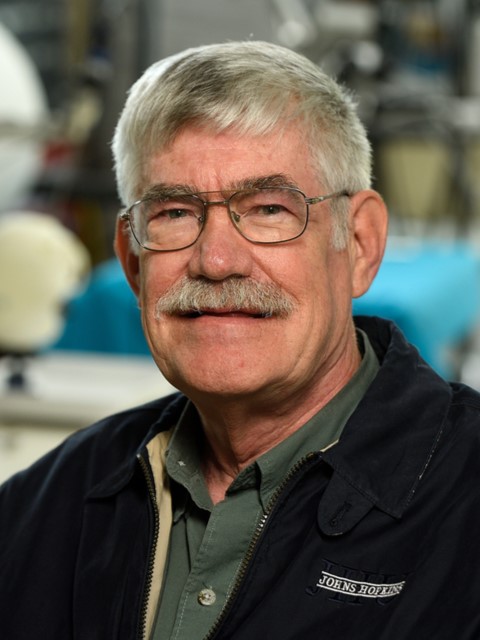
Prof. Russell H. Taylor, IEEE Fellow
Bio: Russell H. Taylor is a John C. Malone Professor in the Department of Computer Science with secondary appointments in the Department of Mechanical Engineering and the School of Medicine’s Departments of Otolaryngology—Head and Neck Surgery, Radiology and Radiological Science, and Surgery.
For more than a decade, he served as the director for the Laboratory for Computational Sensing and Robotics, one of the most technologically advanced robotics research centers worldwide and an international leader in the areas of medical robotics, autonomous systems, and bio-inspiration. Taylor is also a member of the Malone Center for Enginering in Healthcare, the Institute for Assured Autonomy, the Data Science and AI Institute, and the National Academy of Engineering.
Taylor’s research interests include artificial intelligence, robotics, human-machine cooperative systems, medical imaging and modeling, and computer-integrated interventional systems. In addition to his more than 50 years of professional experience in the fields of computer science, robotics, and computer-integrated interventional medicine, Taylor is editor-in-chief emeritus of theIEEE Transactions on Robotics and Automation and has served on numerous other editorial and scientific advisory boards.
In 1994, he was elected as a Fellow of the Institute of Electrical and Electronics Engineers (IEEE) “for contributions in the theory and implementation of programmable sensor-based robot systems and their application to surgery and manufacturing.” He is also a Fellow of the National Academy of Inventors, the American Institute for Medical and Biological Engineering (AIMBE), the Medical Image Computing and Computer Assisted Intervention (MICCAI) Society, and the Engineering School at the University of Tokyo. In 2020, Taylor was elected to the National Academy of Engineering “for contributions to the development of medical robotics and computer-integrated systems.”
He is also a recipient of numerous awards, including four IBM Outstanding Achievement Awards, four IBM Invention Awards, the Maurice Müller Award for Excellence in Computer-Assisted Orthopaedic Surgery, the IEEE Pioneer in Robotics and Automation Award, the IEEE Engineering in Medicine and Biology Society’s Technical Field Award, the MICCAI Society Enduring Impact Award, the IEEE Robotics and Automation Award, and the Honda Prize.
Taylor received a BSE from Johns Hopkins University in 1970 and a PhD in computer science from Stanford University in 1976. He joined IBM Research in 1976, where he developed the AML robot programming language and managed the automation technology department. He then managed IBM’s computer-assisted surgery group before returning to Johns Hopkins in 1995.